
Learning from the Past to Reimagine the Future

We are the DNA of Earth, Moon, Planets, Stars
We are related to the universal
Creator created creation
Spirit and intelligence with clarity
Being and human as power
We are part of the memories of evolution
These memories carry knowledge
These memories carry our identity
Beneath race, gender, class, age
Beneath citizen, business, state, religion
We are human beings
And these memories
Are trying to remind us,
‘Human beings, human beings
It’s time to rise up
Remember who we are’
– John Trudell
Remembering Who We Are
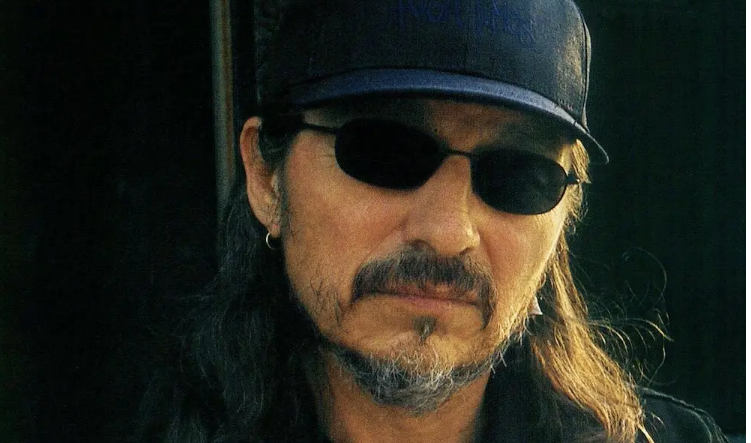
John Trudell (1946-2015) was an Isányathi Dakota artist and activist who came to prominence as a leader of the radical Red Power movement of the 1960s and 1970s. The words quoted above were part of an address he gave at a 2001 benefit in San Francisco for the U’wa people of Colombia, who were trying to stop major oil companies drilling their ancestral land. Trudell did not speak directly to that struggle in his address. Instead, he spoke in poetry and prose on a far broader topic: “What It Means to be a Human Being.” And in his Dakota world of experience, we humans are simply “Children of the Earth.” Like all other creatures, we are relationally entangled with all the things that make our lives possible.1
“So anyway, who we are. We’re human beings. And the DNA of the human being—my bone, my flesh, and blood—is literally made up of the metals, minerals, and liquids of the Earth. We are literally shapes and forms of Earth. … Our being comes from our relationship to the Sun, and to the universe. … [W]ithout the Sun, we could not have life. Alright, it’s almost like the rays of light that the Sun represents and brings to the Earth, see, this is the sperm that gives life to the womb that the Earth is.”
For Trudell, being human therefore means “keeping the balance” with Earth and all her offspring. It means taking full “responsibility” for how our way of life affects all the things on which our existence depends. And it is these relational truths that we have forgotten. Our modern European-style “techno-logic civilization” has destroyed the “spiritual perception of reality,” replacing it with a radically different kind of world, one where we are just “workers” and “citizens” who live primarily for ourselves. Restoring the balance means remembering who we are. We must try to recover the “ancestral knowledge” of our true humanity, which is still buried deep within all of us, “encoded in our DNA.”
As signs of Earth’s fierce resistance to our “techno-logic” way of life are becoming ever harder to ignore, Trudell’s message is hardly less timely today, more than twenty years later. As ice caps melt, sea levels rise, cities sink, storms intensify, and biodiversity continues it’s alarming decline, we would surely do well to heed his call to recommit to a more relationally embedded way of being human. So why is it that this kind of message is not taken more seriously by our leaders, our experts, or the population at large? In this time of polycrisis, is there really nothing useful we can learn about “responsible” living from the Dakota or other non-modern peoples, past and present? Why does the wisdom that they have successfully lived by across the ages no longer seem to count as real knowledge?
The short answer is: We think we know better. We assume non-modern ways of knowing must be “wrong,” because only modernity’s “objective” scientific way of knowing can truly reveal the timeless laws of life and the universe. Only in the modern age, we are told, have humans finally been able to realize their full potential as the self-actualizing individuals they were always meant to be, building western-style societies committed to materialist science, secular reason, personal freedom, and universal rights. And since we are socialized to see these societies as the inevitable culmination of a larger story of human “progress,” common sense tells us that only a modern science-based wisdom can resolve our current existential crisis.
As an academic who is committed to using history for broader public purposes, I believe that this modern common sense may not be as well-founded as it seems. If we are sincere in our commitment to reimaginging the future, there is much we can usefully learn from the past. When viewed through fresh eyes, history itself can tell us that we moderns do not necessarily “know better,” because non-modern ways of knowing how to live well with Earth have not actually been “wrong.” Countless human communities, from prehistory to the present, have lived successfully and sustainably by truths about existence that are radically different from our own. So it makes eminently rational, practical sense for us to heed Trudell’s call to “remember who we are” and learn again from the wisdom of non-modern ancestors.
From Universe to Pluriverse
For some time now, a revolution has been brewing in multiple corners of the academic landscape, one that is not yet well known among the wider public. Simply stated, influential figures in a range of different fields have been taking non-modern bodies of knowledge very seriously indeed. In a fundamental challenge to our modern metaphysical common sense, they are now encouraging us to see that humans have always lived in a “pluriverse” of many different worlds, not in a universe of just one.
This transformed perspective on the human story has been made possible in part by growing academic interest in “traditional ecological knowledge” (TEK). Like Trudell, Indigenous scholars frequently present TEK as a more ecologically responsible alternative to modernity’s detached human-centered way of knowing experience. For the realities that they write about are not objective, in the sense that they are filled with materially self-evident objects, with things that somehow exist in or for themselves. Rather they are relational worlds, where all things, including humans, are effectively ongoing products of their symbiotic entanglements with others. It follows that one can only know the contents of such worlds by engaging directly with them in everyday life, not by observing them through devices, at a distance, from a disengaged modern-style god’s eye perspective.
Hence, for example, Gregory Cajete (Tewa) has laid out a systematic account of a “Native science,” which is “based on the perception gained from using the entire body of our senses in direct participation in the natural world.”2 Dennis Martinez (O’odham and Chicano) has shown how Native wisdom is often organized around a principle of “kincentricity,” which mandates an ethic of reciprocal care between humans and plants, animals and other non-human relatives.3 And in her many writings, Robin Wall Kimmerer (Citizen Potowatomi Nation) seeks to “heal our broken relationship with the earth” by immersing non-Native readers in the altogether different world of her own people. In this other world, humans have no monopoly on forms personhood. They necessarily share “relationships and responsibilities” with all the other fellow beings that make their lives possible.4
“In Potowatomi 101, rocks are animate, as are mountains and water and fire and places. Beings that are imbued with spirit, our sacred medicines, our songs, our drums, and even stories, are all animate. The list of the inanimate seems to be smaller, filled with objects that are made by people. Of an inanimate being, like a table, we say, “What is it?” And we answer Dopwen yewe. Table it is. But of apple, we must say, “Who is that being?” And reply Mshimin yawe. Apple that being is.”5
But talk of different peoples living by different truths in different realities is not just confined to the literature on TEK. For some time now, non-Indigenous scholars in other fields have recognized both the ethical urgency and the analytical utility of studying different ways of life on their own ontological terms, in their own local worlds of experience.
Many-worlds thinking along these lines has already been commonplace in anthropology for over twenty years.6 Pluriversal paradigms of practice have also been proposed and embraced by specialists in history, international relations, and science and technology studies (STS).7 And a younger field, sometimes called “decolonial studies,” is premised on the very idea that humans have lived in a world of many worlds. Work in this area has shown how Indigenous and other subaltern peoples in settler colonist nations subsist in a perpetual condition of racist “coloniality,” whereby they are compelled to internalize modern European-style ways of knowing and being that continually dehumanize them, rendering them forever inferior and a “problem” for capitalist “development.” For such communities, decolonization would therefore mean nothing less than their wholesale liberation from the settler colonial yoke, a revitalization of their ancestral selfhood, and a full restoration of their right to thrive in worlds of their own experience.8
If one needs more explicit theoretical or philosophical justification for pluriversal thinking, one can find it in a variety of currents in contemporary critical theory. Particularly helpful is the paradigm known as material semiotics, which shows how reality is a historically variable effect, something that must be continually enacted into being, not something that is simply given or fixed.9 Essentially, this kind of effect is generated whenever non-humans of all kinds, from climates, plants, and animals to books and computers, consistently collaborate with the practices on which human communities have staked their lives. Some now use the term “worlding” to describe this co-production of reality by humans and non-humans. Here’s a straightforward way to visualize it.
Every human community stakes its life on certain truths about the essential contents of experience, on shared certainties about, say, the nature of personhood and humanity, about how to relate to non-human others, about the fabrics of the lived environment and how they came to be there, and about the sources, means, and ends of life itself. As these truths become tried and tested in practice, they harden into common sense laws of being, a kind of metaphysical “model” of the world to live by. This model duly becomes embedded in the minds and bodies of community members, in all their life-sustaining norms and practices, and in their built environment, shaping their relations with one another and with all the other-than–humans on whom their existence depends. So long as those others continue to cooperate in more or less stable, predictable ways, then the community will be able to reproduce itself successfully across the generations. And the model will thus come to be continually enacted in everyday experience. In short, a worlding process produces the ongoing effect of a materially self-evident reality, a world that already seems to be there all by itself.
If so, there can be no single universally true, right, or final way of knowing what’s really there, because what counts as knowledge will always be historically contingent upon the particular world “model” that is being realized in practice in any given time or place. What matters, then, is not that our knowledge conforms to some timeless abstract truth standard, objective or otherwise. What matters is that the prevailing model of the world is actually realizable and livable in practice, whether we are, say, ancient Egyptians, Indigenous Amazonians, or modern Europeans. Which is to say, what matters above all is that our ways of worlding align well with the vital rhythms, needs, and impulses of the multifarious non-humans with whom we coexist in any given habitat.

The Modern Anomaly
When one then re-views history through a more kaleidoscopic pluriversal lens, a very different panorama of life on the planet begins to materialize before our eyes, one that is nothing like modernity’s triumphal story of a universal linear “progress.” Instead, one sees a vast horizon of continually evolving, often interactive worlds, all of them with their own local geographies and chronologies, their own divinities and humanities, their own socialities and rationalities, their own ways of relating to the fabrics of planet, their own means and meanings of life itself. But certain patterns are also readily discernible.
The great majority of these worlds contain all kinds of things which defy our own objective laws of being. They are alive with capricious gods and guardian angels, with demonic monsters and patron saints, with irresistible fates and family curses, with the vital powers of deceased heroes and ancestors, and with all manner of other mysterious energies and magical forces. Here, some humans are born from maternal soils or descended from immortal rivers. Others escape earthly bounds to traverse invisible spiritual realms. Animals talk, ants teach, fish are sacred, and birds reveal the future. Plants and trees freely share their own life-saving knowledge. Forests and mountains are lively subjects not inert objects, beings who act on their own needs and interests.
And we can also see that these very same non-modern worlds are also routinely successful in practice. Somehow, through their “primitive” and “pre-scientific” ways of worlding, they flourish. When left undisturbed by outsiders, they are consistently able to perpetuate themselves across multiple generations, supporting many real material lives for hundreds, sometimes thousands of years. And in so doing, not one seems to inflict catastrophic damage on the fabrics of Earth, undermining the material conditions of its own existence. As far as one can tell, they are consistently sustainable.
Elsewhere in history’s extraordinary pluriverse, we then see a wholly different kind of world, an intrusive and disruptive outlier. When evaluated on its own internal terms, this would be by far the most successful world of all. With its unique commitment to a scientifically-grounded capitalist way of life, it has reduced gods and all other “supernatural” agencies to mere figments of “irrational” human belief. It has liberated whole populations from their ancestral fealties to “backward” clans, tribes, and monarchies, turning them into nations of free, competitive, wealth-maximizing individuals. It has reengineered entire environments to optimize their yields of crops, timber, meat, minerals, and water. It has found remedies for hitherto incurable diseases and invented any number of devices to make human life more comfortable and convenient. In so doing, it has generated unprecedented levels of societal complexity, technological sophistication, and material wealth. And it has by now exported its novel “modern” ways of worlding all over the globe, advancing the overall “development” of humankind.

But when we then try to view this same modern kind of world, as it were, from a pluriversal outside, we can see more clearly how its novel ways of worlding have also inflicted untold levels of damage on humans and other-than-humans over the past several centuries. Not only have they obliterated almost all the other worlds in history’s pluriverse. They have somehow imperiled the whole future of the planet in just a few hundred years. And along the way, they have stoked and unleashed forces which have caused all manner of historically unprecedented horrors: genocides and ethnocides across entire continents; the exploitation and racist dehumanization of numerous colonized and enslaved peoples; the nightmares of industrial servitude, urban squalor, and systemic poverty; two monumentally destructive world wars; the Holocaust; nuclear weapons; epidemics of mental illness and drug addiction; garbage mountains; open-cast mining, monocropping, and factory farming; ubiquitous fertilizers, pesticides, and herbicides; genetic engineering of plants and animals; loss of numberless species and biodiversity; and of course the whole age many now call the Anthropocene.
How can one explain such divergent ecological outcomes? How is it possible that “irrational” ancestral ways of life are so much more sustainable than modernity’s boldly experimental, scientifically engineered mode of existence?
Five Laws of Non-Modern Being
A pluriversal vision of the past can help us to answer this question by offering us a new way to think about the historical sources of sustainability and unsustainability. It allows us to see that the differences between non-modern and modern kinds of worlds are not just political, social, economic, cultural, or technological. They are not just a matter of divergent values, beliefs, or practices. These differences go all the way down to the ontological and metaphysical levels, to the world models we live by, to the foundations and essences of being itself. And here too significant patterns are readily visible.
For all the visible differences among them, the worlds enacted by non-modern communities share a number of basic metaphysical commonalities. Five of these shared laws or foundations of being seem to be especially congenial to ecological sustainability.
a. Being is belonging
Modern humans are schooled to think of the cosmos as a vast container of discrete material objects, a space that is everywhere at once and nowhere in particular, a universe without center, limits, higher purpose, or intentional design. In stark contrast, every known non-modern cosmos is umbilically anchored in a particular habitat, a parent-like life source or cradle of vitality that actively nurtures and conditions all the contents within.
Hence, humans in these worlds often feel a profoundly un-modern sense of continuity or consubstantiality with the environments that have made their lives possible. Some first emerged literally from the soil of a divine earth mother, like the ancient Athenians, the Hopi, the Zuni, and other Native American peoples. Others were themselves originally formed from earthy materials, as we see in the Book of Genesis, the Qu’ran, the Mesopotamian Atra-Hasis epic, and the ancestral traditions of the Dayak of Borneo, the Vietnamese, the Malagasy, and the Inka. Elsewhere, forests have been parent-like providers of life for peoples such as the Mbuti of DR Congo, the Kajang of Indonesia, the Kattunayaka of southern India, the Yanomami, and numerous other Indigenous Amazonians. Quechua-speaking peoples of the Peruvian Andes have been continually supported by fatherly mountains (apus) and earth mothers (pachamamas). And some Maori iwi relate to great rivers like the Waikato and Whanganui as life-nurturing ancestors.
Unlike modernity’s universe, non-modern worlds also tend to gravitate around a fixed center, an axis mundi from which vital energies radiate out across the cosmos. These axial points can assume many possible forms, including: “trees of life” like the Norse Yggdrasil and the Mayan Yaxche; “holy mountains” like the Daoist Kunlun, the Samaritan Mount Gerizim, and the Black Hills of the Lakota; ritual sites like the Javan Borobudur and the Hebrew temple of Jerusalem; and even whole cities, like Babylon, Rome, Persepolis, Mecca, Nanjing, Cusco and Tenochtitlán. And unlike a modern universe, non-modern worlds are always finite in practice, with habitats defining both their physical and metaphysical limits. Non-modern humans thus tend to feel a perpetual sense of insecurity. Because life’s sources are inevitably exhaustible, they must be cherished and preserved for all generations to come.
b. A world is a symbiotic ecology
We are told to think of our universe in mechanical terms, as a space where multitudes of individuated entities all obey timeless physical laws while existing ultimately for themselves. Again, the contrast with with non-modern worlds could not be stronger. Here, an essential oneness of being is fostered among the contents of experience by their embeddedness in a shared habitat. This symbiotic oneness is expressed through various forms of relational entanglement.
Arguably the strongest ecological bonds occur in those worlds where relations of kinship, sociality, and/or shared culture widely prevail between humans and other-than-humans. For the Lakota and other Native peoples, Creation is full of “all my relatives” (mitakuye oyasin), the beings of all kinds on whom one’s own life depends. In the Maori cosmos of Aotearoa (te ao Maori), a deep sense of kinship (whanaungatanga) abides among all the world’s “treasures” (taonga), from people and animals to plants, trees, land, and waters. Otherwise, in the rainforest worlds of the Malaysian Chewong and many Amazonian peoples, the oneness of being expresses itself as a kind of common multispecies culture, where most if not all living things share the same human-like consciousness or subjectivity, regardless of their physical differences.
In larger, often more urban-centered worlds, ecological oneness is ultimately sustained through close relations between humans and the superhumans who immanently manage all the conditions of existence. In some cases, these relations are modulated through a single figure who represents and/or embodies divinity in the terrestrial realm, like the emperors of imperial China, the Egyptian pharaohs, the Andean Sapa Inka, and the rulers of Hindu kingdoms in precolonial South Asia. Elsewhere, as in ancient Athens and Rome, all full members of the human community are expected to maintain vital social relations with a large pantheon of world-making superhumans. Similar responsibilities fall on humans in the worlds of Japanese Shinto and the Yoruba oro, which teem with multitudes of spirits that animate the other beings and things on whom one’s life depends.
Then there are those cases where the oneness of the world is a direct result of its design and creation by a single transcendent god, a deity who has expressly crafted all things to subsist symbiotically, as integral components of a unitary system of life. According to the traditional Islamic understanding in the Qur’an (e.g., 16:65-69), the unity, balance, and harmony of Creation manifests the unity, ominiscience, and perfection of the Creator himself. Meanwhile, mainstream Christian thought in the medieval era could claim a similar oneness in various ways. For example, one could make sense of Creation as a Great Chain of Being (Scala Naturae), whereby all the world’s contents, from purely material entities like stones to more purely spiritual creatures like angels, were purposely designed to make their own particular contributions to the flourishing of the whole. Or one could identify a whole array of correspondences between the component parts of the cosmos, such as those between the four elements (Air, Earth, Fire, and Water), the four planets (Jupiter, Saturn, Mars, and the Moon), the four seasons, the four ages of humans, and the four humors (Blood, Black Bile, Yellow Bile, and Phlegm).
Whatever the case, the symbiotic entanglement of non-modern humans in their wider ecologies means that they are always in some sense relational beings. Here, in other words, the modern self-actualizing individual would make no sense at all as an entity.
In some worlds, it is taken for granted that human community members can act as a unitary corporate self, as if with a single mind, will, and interest. Members of these social bodies may be effectively interchangeable, as in the case of the demos (“people”) of the Athenians. Or they may be diffentatiated by rank, as a in a medieval European “body politic,” where the monarch serves as the head, the bishops as the soul, ministers as various organs, soldiers as the hands, ploughmen as the feet, and so forth.
More common, if anything, are worlds where each human is somehow enacted as a “dividual” person, a composite of life-defining elements that derive from relations with others. For instance, among the Dogon of Mali, each person is composed of three elements from different sources: a body (goju) from the father; a character (hakile) from the mother or father; and an inner vitality (kikine) from the creator god Ama. Elsewhere, in a traditional Hindu world, a person is a permeable and fluid being, an ongoing coalescence of substances that are exchanged in one’s relations with others, like blood, cooked food, money, words, and knowledge.
c. Humans are not alone
It is an article of faith in modernity that a kind of primordial dichotomy prevails in experience between a human order of “culture” and a non-human order of “nature.” Underpinning this divide is a conviction that our species is exceptional among all the contents of the universe, not least because we monopolize the faculties of personhood, like consciousness, reason, language, and rights. Yet again, the situation could not be more different in non-modern worlds, where humans must share life’s responsibilities with all manner of other-than-human persons, beings who routinely exercise forms of sentience, rationality, agency, and sociality.
In many cases, like those of ancient Greece, Rome, Egypt, Persia, China, and Hindu South Asia, humans must maintain more or less continual social relations with a host of independent gods, spirits, and other immortals, superhuman beings who control and/or embody all of the permanent fabrics, forces, and processes of the cosmos and make it whatever it is. Numerous other worlds are even more radically “alive” with persons of all kinds, like those of many Amazonian communities, the Lakota and Dakota, the Inuit and Innu, the Sámi of Fennoscandia, the Yukaghirs of Siberia, the First Nations of Australia, and the Maori. Here, a human-like agency, will and subjectivity may be widely shared among earthly phenomena, including animals and plants, rivers and lakes, soils and rocks, mountains and forests, storms and winds.
d. Life demands accountability to others
Modern humanity has effectively unburdened itself of all responsibilities to others, treating the planet’s abundance as little more than a deposit of exploitable, commodifiable “resources.” It has staked its life on political, economic, social, and other mechanisms which require it to be answerable only to itself. Non-modern humans have no such freedom. Since life for them always depends on maintaining symbiotic relations with a wide array of other-than-human persons, it necessarily brings with it duties of care, respect, gratitude, and accountability towards those beings.
In worlds governed by pantheons of gods, this continual sense of accountability may be expressed through, say, regular oaths, prayers, sacrifices, votives, first fruit offerings, and invitations to participate in banquets and other social events. When understood on their own terms, such practices are not just simple-minded exercises in faith, piety, or “religion,” traditions that must be dutifully observed while the real “secular” business of life is being transacted elsewhere. They are the real business of life. They are vital ecological mechanisms that help secure the most fundamental conditions of existence, like sunshine, rainfall, the life processes of humans and non-humans, and the success of, say, community decisions, sea voyages, commercial exchanges, and battles. There can be no modern-style sacred/secular divide in such worlds, no “separation of Church and State.”
Meanwhile, in worlds where personhood is more widely dispersed among the contents of Creation, the practice of accountability to others assumes an even wider range of forms. For example, when engaging in lake fishing, Sámi should abide by an ethic of jávrediksun, which obliges them to take responsibility for the long-term well-being of both the lake and its resident fish. To ensure that caribou will willingly give themselves to sustain human lives, the Innu of Labrador commit to sharing their meat appropriately, treating their bones and other body parts with respect, and maintaining harmonious interpersonal relations with their spirit master Kanipinikassikueu. Shamans of the Amazonian Makuna must engage in negotiations with the spirit masters of other species over the animals and fish they hunt, making offerings to ensure that lost lives are replaced.
e. Experience is ultimately mysterious
As an order that is reducible to materially self-evident forces and entities, our clockwork modern universe is theoretically knowable in its totality, all the way down to the tiniest sub-atomic particles. Our science prides itself on its uniquely detached, objective way of knowing, which rules out any “subjective” relationship between knower and known. Non-modern peoples, on the other hand, tend to know things precisely through their life-sustaining relations with them. As a result, they can also humbly accept that there will always be mysteries in experience. After all, they routinely share that experience with other persons, non-human and superhuman, who know things humans could never know. And their worlds abound with invisible beings, forces, and processes that, by definition, elude full human understanding.
To be sure, the mysterious wills of the cosmos may be divined by some humans with extraordinary aptitudes or special ancestries, like Egyptian temple astrologers, the Pythia at Delphi, Amazonian shamans, the Lakota wicasa wakan, and the babalawos of Afro-Cuban Ifá. And countless peoples have acquired wisdom from other-than-human persons, like trees, plants, animals, birds, waters, and winds. For them, as Lakota Chief Luther Standing Bear once said, the whole world can be an inexhaustible “library” of knowledge.10 But in all cases, there are things that are just not for humans to know. In all cases, modernity’s faith in an objectively knowable universe would seem arrogantly presumptuous, if not utterly delusional.
In sum, it is not too hard to see how ways of worlding that have abided by these five fundamental principles have been consistently sustainable in all kinds of habitats across the ages. At the same time, we can also see more clearly how our modern way of worlding may have triggered the current polycrisis in the first place. For it has not only abandoned all of the time-tested “ancestral” principles just described. It has instead staked our lives on practices which enact a radically different, hitherto untested model of the world, one premised on a reductive materialism, a self-serving anthropocentrism, an unaccountable secularism, and a relationally destructive individualism. In other words, to understand the genesis of our current predicament, one might do well to look beneath the surfaces of ecologically harmful modern practices, focusing instead on the peculiarly modern laws of being that have rendered those practices acceptable and normal, even natural, in the first place.
It follows that a transition to a more just, more ecologically responsible order would necessarily involve more than just behavioral adjustments, institutional reforms, or scientific techno-fixes. It would involve a systematic realignment of our whole way of worlding with once inviolable historical norms. It would mean hinging our lives on practices that enact altogether more balanced, more relationally entangled kinds of worlds into being.
Learning from Others
Arguably, the single greatest impediment to a shift of this kind is our deeply internalized faith in the superority of a modern technoscientific capitalist way of life. But this unquestioned faith in the present depends on a particular way of seeing the past, one that predisposes us to privilege the modern over the non-modern. In the classrooms of our schools and universities, in academic textbooks and scholarship, and in the public mind in general, history is conventionally viewed as something that unfolds in a single universe of experience, in a reality that rests on materialist, anthropocentrist, secularist, individualist foundations. In other words, modern historical consciousness takes a peculiarly modern model of the world entirely for granted. So it is inevitable that a way life which is expressly designed to flourish in that very same kind of world will come to seem normal and rational, even natural and “right.” By contrast, non-modern ways of life, which were designed to thrive in entirely different kinds of worlds, will no less inevitably look ignorant or irrational, too often depending on practices which seem strange, backward, or otherwise at odds with “reality.” Far from offering ecologically inspiring examples for us to learn from, conventional history is thus all but pre-programmed to tell stories about a past that we have gladly left behind.
A new pluriversal account of the larger human story could help us to break this self-perpetuating cycle of historical confirmation bias. It would produce a decolonized past, one where non-modern peoples would in theory be liberated from modern standards of truth and realness, allowing us finally to see how they worked to secure and preserve life in worlds of their own making. It would encourage us to make sense of those worlds on their terms, not on ours. And at that point, we would not only start to understand why their life-sustaining practices made perfectly rational and practical sense at the time. We might also begin to appreciate why their ways of worlding have so consistently been more sustainable than our own.
In these times of planetary peril, we need new stories to believe in, even if they are stories that actually reflect life experiences of a distant past. When we are willing to view it through fresh eyes, from a pluriversal perspective, history becomes a vast repository of such tales, making it possible for us to learn again from bodies of knowledge that humans have successfully lived by for millennia.
If such stories were to be told in classrooms, in scholarly works, and in publications that reach a broader readership, they might hopefully inspire new kinds of imaginings about other possible futures for all humankind. Instead of normalizing and naturalizing our modern way of being human, these alternative histories would necessarily help to exceptionalize it, directly or indirectly drawing attention to its drastic departures from more ecologically responsible historical norms. And in so doing, they might in turn increase support for the many decolonial projects that are being pursued by Indigenous peoples and others around the globe at this moment, further sensitizing the public to the truly existential stakes of those struggles.
This at any rate would be one eminently practical and productive way of responding to John Trudell’s timely call to learn again from the wisdom of the ancestors. Again, how can this kind of knowledge be “wrong” if it has worked so well for so long, helping billions of humans to live well with Earth for millennia? Trudell’s thinking is entirely pragmatic, not magical. As he says of his own people:
“So they had this understanding of reality. So they knew that to keep the balance was the purpose. … So this was like, you know, what I will call the spiritual perception of reality. And so because of the spiritual perception of reality they understood that life was about responsibility. It wasn’t about the abstraction of freedom. … So the spiritual perception of reality was based upon that: we were the Children of the Earth. The Earth was our Mother. The Sky, the Sun and the Sky—these were our fathers. … [A]nd our reality worked for us.”
Return to the Table of Contents for Remembering the Future
Footnotes
1. https://ratical.org/many_worlds/JohnTrudell/HumanBeing.html
2. Gregory Cajete, Native Science: Natural Laws of Interdependence (Santa Fe, NM: Clear Light Publishers, 2000).
3. Dennis Martinez, ‘Redefining Sustainability through Kincentric Ecology: Reclaiming Indigenous Lands, Knowledge, and Ethics’, in Traditional Ecological Knowledge: Learning from Indigenous Practices for Environmental Sustainability, ed. Melissa K. Nelson and Dan Shilling, (Cambridge: Cambridge University Press, 2018), pp. 139-174.
4. Robin Wall Kimmerer, ‘Mishkos Kenomagwen, the Lessons of Grass: Restoring Reciprocity with the Good Green Earth’, Traditional Ecological Knowledge: Learning from Indigenous Practices for Environmental Sustainability,ed. Melissa K. Nelson and Dan Shilling (Cambridge: Cambridge University Press, 2018), p. 27.
5. Robin Wall Kimmerer, Braiding Sweetgrass: Indigenous Wisdom, Scientific Knowledge, and the Teachings of Plants(Minneapolis: Milkweed Editions, 2013), pp. 55-56.
6. See e.g., Helen Verran, ‘Reimagining Land Ownership in Australia’, Postcolonial Studies, 1:2 (1998), 237-254; Eduardo Viveiros de Castro, “Cosmological Deixis and Amerindian Perspectivism,” The Journal of the Royal Anthropological Institute 4.3 (1998), pp. 469-488; Mario Blaser, ‘The Threat of the Yrmo: The Political Ontology of a Sustainable Hunting Program’, American Anthropologist, 111:1 (2009), pp. 10-20; Philippe Descola, Beyond Nature and Culture (Chicago: University of Chicago Press, 2013); Martin Holbraad, The Ontological Turn: An Anthropological Exposition (Cambridge: Cambridge University Press, 2017).
7. History: Greg Anderson, The Realness of Things Past: Ancient Greece and Ontological History (New York: Oxford University Press, 2018). International relations: e.g., Suzanne K. Schaarsberg, ‘Enacting the Pluriverse in the West: Contemplative Activism as a Challenge to the Disenchanted One-World World’, European Journal of International Relations, 30.2 (2023), pp. 434-460. STS: e.g., John Law, ‘What’s Wrong with a One-World World?’, Distinktion: Scandinavian Journal of Social Theory, 16:1 (2015), pp. 126-139.
8. See e.g., Walter D. Mignolo, The Darker Side of Western Modernity: Global Futures, Decolonial Options (Durham, NC: Duke University Press, 2011); Walter D. Mignolo and Catherine E. Walsh, On Decoloniality: Concepts, Analytics, Praxis (Durham, NC: Duke University Press, 2018).
9. See e.g., Annemarie Mol, The Body Multiple: Ontology in Medical Practice (Durham, NC: Duke University Press, 2002); John Law and Annemarie Mol, ‘The Actor Enacted: Cumbrian Sheep in 2001’, in Material Agency: Towards a Non-Anthropocentric Approach, ed. Carl Knappett and Lambros Malafouris (New York: Springer, 2008), pp. 57-77; Law, “What’s Wrong with a One-World World?”
10. Luther Standing Bear, Land of the Spotted Eagle (Lincoln, Nebraska: University of Nebraska Press, 1978), p. 194.