
ReEarthing the Human Mind

You only have to let the soft animal of your body love what it loves.
– Mary Oliver, American poet
Historically, in Western psychology, theories about human behavior and development centered around the question of what is intrinsic in a person and what is learned through childrearing practices and cultural experiences. Eventually, Western psychology settled on an explanation acknowledging that a combination of both results in a person’s thoughts and behaviors, and whether they are considered functional and adaptive or dysfunctional and maladaptive.
For the purposes of our exploration, I’d like to consider all hypotheses about human nature and the common ways we have of thinking about the human species rather than getting into a philosophical debate about which perspective is correct. I’d like us to wonder together about all our assumptions about human nature, because mainly we’re evaluating behavior that’s occurring post-civilization. We’re observing behavior that results from a nature-separated mindset.
The merging of theological and philosophical arguments brought forth ideas of inherent goodness with two categories of belief: humans are innately ‘basically good’ or humans are innately ‘basically sinful, self-centered and corrupt.’ Most people still tend to talk about human nature in this way, especially when confronted by antisocial behaviors, from lying and stealing to horrific abuse and violence. It’s hard to make sense of the ways we mistreat each other, the way we mistreat other species, and the way we mistreat our environment.
Although I tend to fall in the former group, that people are innately good, I have had countless experiences of people pointing out the horrific things people do as evidence to the contrary. It certainly can feel like a losing battle. Oftentimes we tell each other a lot of stories about human nature when we see behavior that is cruel. Stories about aggression, violence, destruction, jealousy, oppression, greed, and a host of other antisocial qualities are explained as inevitable because, “That’s how it’s always been. It’s human nature.” Even a person who believes in innate goodness may want to throw in the towel on the human race.
The antisocial qualities and behaviors humanity seems unable to stop would suggest it’s something about our nature. But what I’d like us to wonder about is, are these qualities truly natural to us? Or are they the result of living in a perceptual paradigm and social structure that goes against our nature? We have no doubt that animals living in captivity behave differently than in their natural environment, or as we say, “in the wild.”
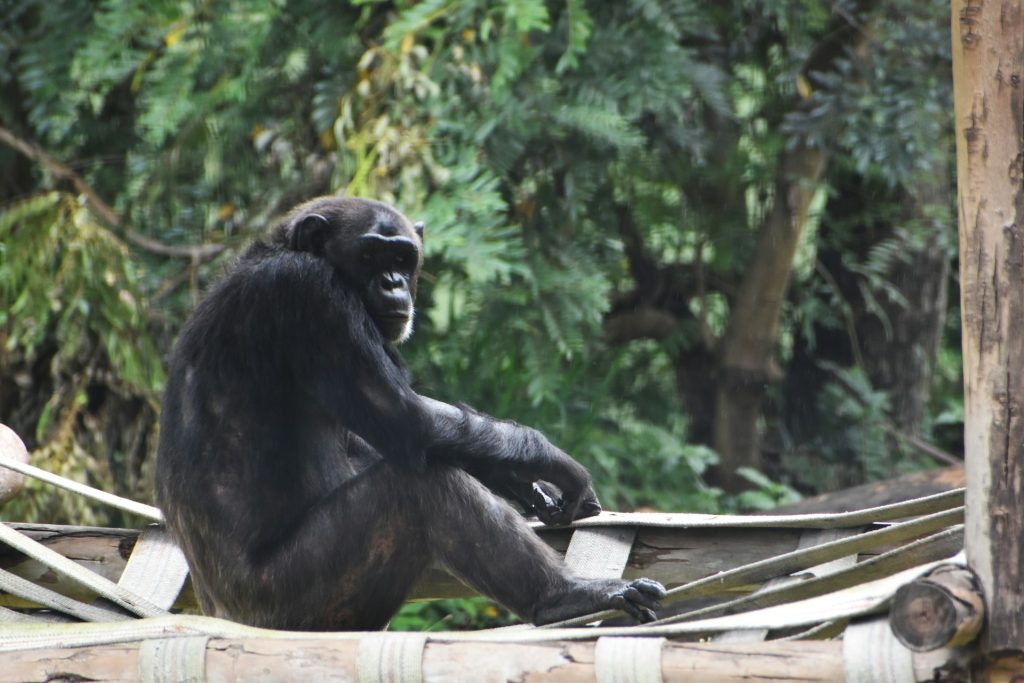
For example, many chimpanzees in captivity show a variety of serious behavioral abnormalities, some of which have been considered possible signs of compromised mental health. These are behaviors that don’t occur in chimps living in their natural environment. And studies show that Beluga whales in captivity show aggressive behavior as their only means of expressing their distress and suffering in situations they cannot escape. In the case of Beluga whales, people have misattributed the behavior to “playfulness,” but marine biologists have no doubt that the Belugas are showing behaviors that do not occur in the wild and are symptomatic of distress.
Is it possible that humans are in this same predicament? In the case of our own species, not only do we have trouble recognizing how captivity has changed human behavior, but we can’t even perceive that we are captive. And we, like in the case of Belugas, may have some gross misinterpretations of what is normal, expected, and acceptable.
We’ve been living in captivity for generations upon generations. For so long, in fact, we don’t remember what non-captivity is like. When we imagine the alternative to the life we’ve grown accustomed to, we default to fictional and mythological descriptions that are usually negative or frightening to us—something like living in a cave somewhere vulnerable to the elements and wild animals. If we tell ourselves that a nature-embedded lifestyle is scary, threatening, and “difficult to survive,” we won’t even allow ourselves the chance to imagine what it might actually be like, much less engage in ways that would create such a lifestyle—which, by the way, keeps us in captivity.
The captivity that I’m referring to is simply the perceptual cage we call civilization. Civilization describes itself as distinctly different from what in the past was insultingly referred to as “savage” or “wild” cultures that were being colonized. Truthfully, pre-colonized Indigenous cultures were—and are—a way of life humans developed by living in intimate connection and respectful harmony with the rest of nature. In fact, nature-embedded cultures have survived sustainably for thousands of years.
Civilization distinguishes itself by fundamentally denying our human-nature connection. Its denial begins at the personal level and extends to the larger societal level. The civilization that we’re a part of right this minute is functioning on that premise and we, as part of that structure, are functioning in that denial along with it.
Right this minute you and I are functioning in a society that denies our deepest connection with Earth. We may have an intellectual understanding that we are part of Earth, just as the soil is. Yet we perceive ourselves as separate from soil, maybe even better or more important than soil. Certainly more intelligent, right? We don’t usually think about the fact that our bodies include some of the same elements as soil, or that the soil in part transforms into the fruits and vegetables we eat. To belong and function in this society, we suspend those thoughts and operate with the contradictory premise that we are different from the rest of nature and therefore separate from it.
When we maintain this distorted perceptual barrier—that we are different from, superior to, or sometimes inferior to the rest of nature—and these same beliefs have created a lifestyle where we rarely have access to our original habitat, how can we possibly claim to know what is natural in humans? It’s quite possible that what we know of ourselves now is solely how we behave within the limits of a social structure founded on that false premise. Little by little we have left behind Nature itself and what we may have known as our natural way of being.
When we engage in a practice to restore our original sense of “Self-as-Earth,” recognizing that humans and nature are the same thing, we can repair our fundamental human-nature connection—that intrinsic bond—and regain a sense of how we belong in and to nature.
Then we can rediscover how we behave naturally, meaning in alignment with our true untamed human nature, as well as in alignment with the rest of nature with which we co-create and co-inhabit our planet.
My personal reEarthing process began one afternoon in 2005 while reading Thom Hartmann’s book The Last Hours of Ancient Sunlight. I embraced his thoughts on the unsustainability of living in our modern fossil fuel-based, consumption-oriented culture in contrast to the Indigenous cultures of our ancestors who lived sustainably for tens of thousands of years. This truth challenged what I had been taught—that our technological advances from the cotton gin to the internet made us better as a society and had overpowered, colonized, or otherwise “wiped out” nature-based cultures.
However, that’s not true. We don’t have to travel back in time to find examples of nature-embedded people. Nor have these people been wiped out. There are an estimated 476 million Indigenous people in the world. Seven million live just in the United States. The United American Indians of New England proudly remind all of us, “We Are Not Vanishing. We Are Not Conquered. We Are Strong As Ever.” There are also thought to be around 100 uncontacted tribes living in hard-to-reach areas around the world. These people, experts in living in the forests, are well aware of the “outside world,” yet choose to stay independent from civilization, preferring their way of life deep in the forest.
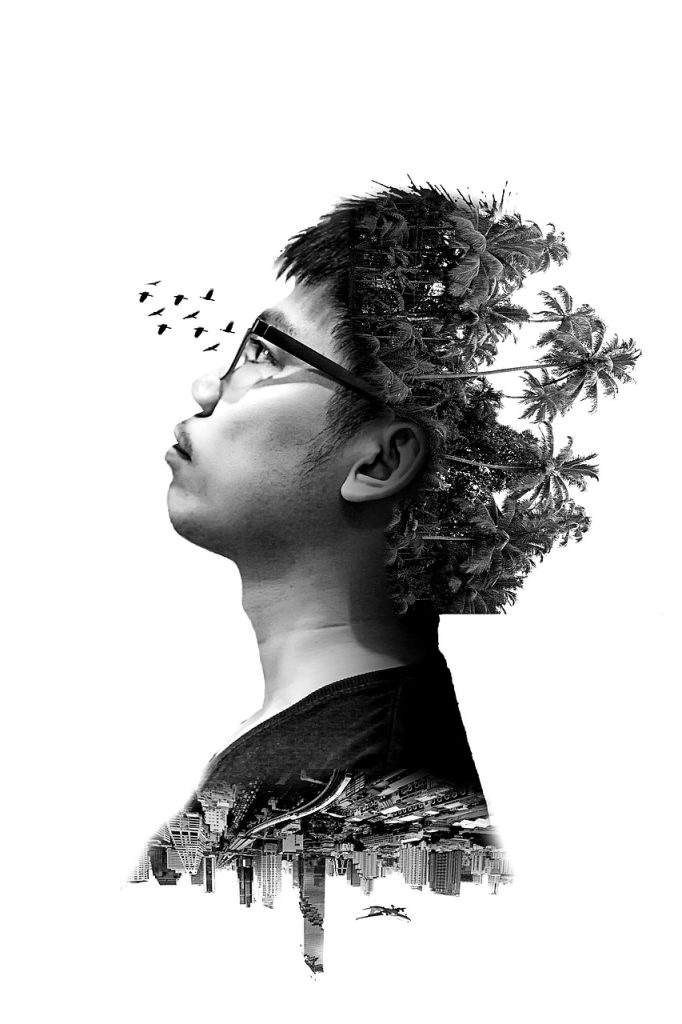 There are tribal people choosing voluntary isolation in the rainforests of Brazil. These people are nomadic and live by fishing and hunting. They keep themselves separate from loggers and others that pose modern threats. Dwellings can be built in a matter of hours and provide shelter for the tribe for as long as needed, and then are left behind as they move deeper into the forest when outsiders threaten to make contact. Other uncontacted tribes are protected by the government and no contact is made unless there is some danger to the tribes. These uncontacted people live in harmony with the rest of nature as well as with neighboring tribes, with whom they may or may not have friendly relations.
There are also Indigenous cultures that have escaped colonization and therefore still carry the wisdom of their ancestors and a lifestyle that is in harmony with the rest of nature. One example is the Aboriginal peoples in the Australian outback. Experts in living in areas that colonizers couldn’t survive in, they have been able to maintain themselves and their way of life. And despite colonization, other Indigenous cultures in the Americas and Africa have maintained the wisdom of their (our) ancestors and their traditions.
 You may be wondering if the goal of repairing our human-nature relationship means going back to an ancient way of life and leaving our modern technology behind. The simple answer is no. However, understanding the results of separating ourselves from the rest of nature is important for our species and ultimately for creating a new way of sustainable living. Finding a way of reintegrating ourselves back into alignment with the rest of nature is perhaps the process of defining a new culture—a third way—which serves us all, human and more-than-human alike.
The most significant changes will be in our mind—perceptual and internal. The external result, meaning how that culture will behave, will unfold from there. Each of us will be part of what that new way looks like.
Everything on Earth is valuable and has a sacred right to life. Interconnectedness is how we thrive. Our humility will determine our survival. Our collective story will determine our fate.
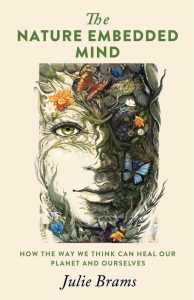 Our collective story about our place in nature—our thinking—is the key to changing not only how we experience life here, but whether we will survive as a species.
Excerpted from The Nature Embedded Mind: How the Way We Think Can Heal Our Planet and Ourselves, by Julie Brams, available HERE